
14 August 2026 · AW Prod
How to Assess a Cannabis Vape Cartridge

By Priya Sutton
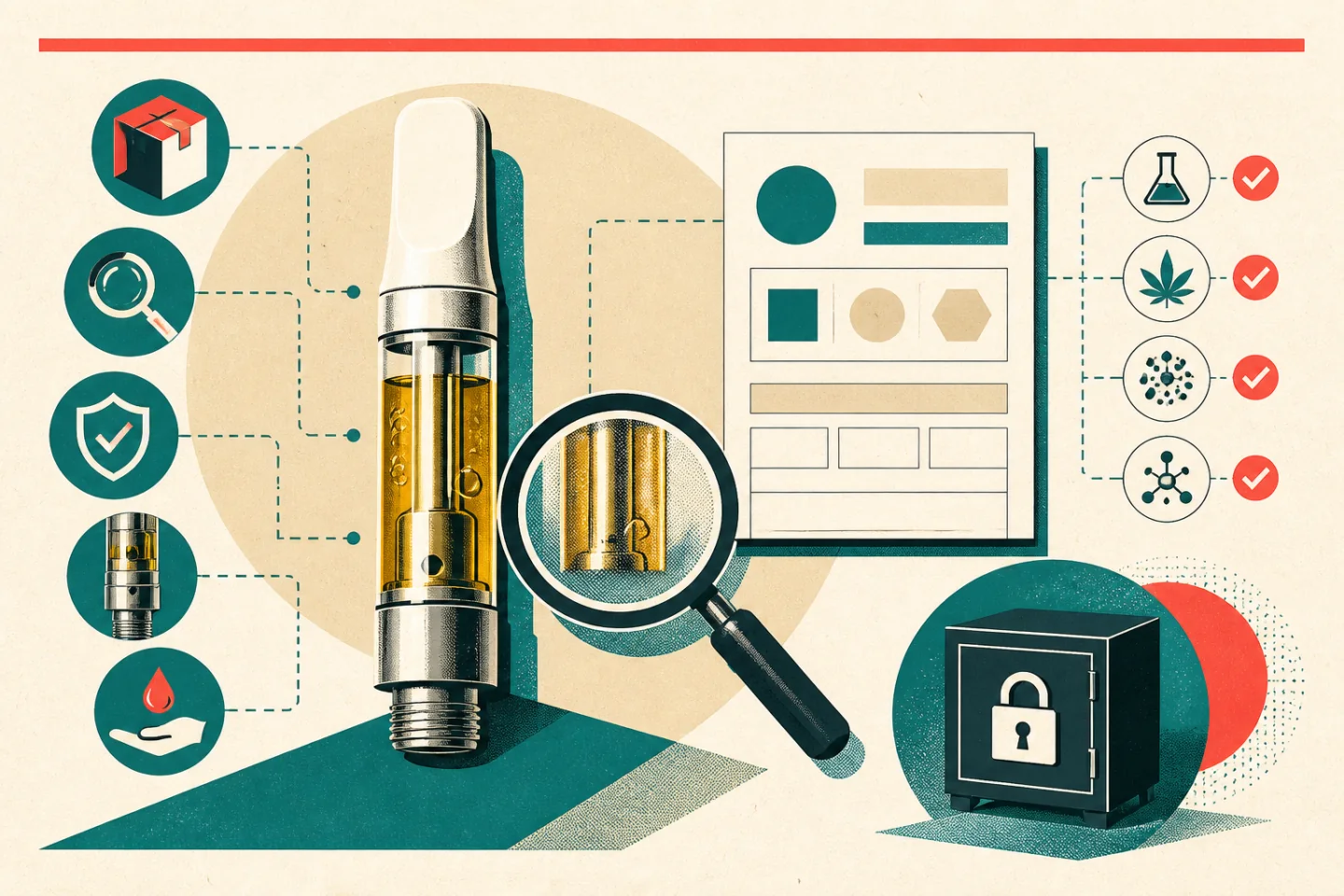
A cannabis vape cartridge should be judged by its traceability, contents and condition, not by its name or packaging design. An online listing cannot establish that a particular item is genuine, legal or safe to use.
This guide explains the checks that matter before purchase and during use. It applies to prefilled cartridges and all-in-one disposable devices. Cannabis laws and labelling rules differ between jurisdictions, so confirm the current position with the relevant regulator and buy only through a licensed local retailer.
Two commercial references retained from the source draft are Mad Labs carts and an official Mad Labs product verification page. Neither replaces independent batch records or regulatory checks.
Identify the Device and Its Legal Status
A cartridge, often shortened to cart, contains oil, a heating element and a mouthpiece. Many cartridges connect to a separate battery using a common screw thread. A disposable combines the oil chamber, heater and battery in one unit. The package should state which format it is, how much oil it contains and whether any separate equipment is required.
Do not assume that a product sold online may legally be delivered to your address. Rules can depend on the type of cannabinoid, the buyer's age, the seller's licence and the place of sale. A retailer should be able to show its current licence and explain how the item entered the regulated supply chain. Avoid a seller that provides only social-media messages, accepts no age verification or cannot identify the licensed producer or distributor.
The outer package should be sealed and carry the warnings required in the place of sale. It should also identify the responsible licensed business, net contents, cannabinoid information, ingredients and a batch or lot number. Missing regulatory details are more significant than a slightly different colour, logo position or box finish.
Match the Package to the Batch Record
Batch-level information is the strongest practical check available to a consumer. Compare the lot number on the box with any number printed on the device, insert and laboratory report. The product name, oil type, package size and production details should agree across those records. A generic report for a brand or flavour is not evidence for the item in hand.
A QR code is only a route to information. Scan it cautiously and inspect the destination before entering any details. A code that opens a home page, shop or promotional post does not verify a batch. A verification page is useful only when it returns information that matches the exact package.
Keep the packaging and receipt while the device is in use. They provide the lot number and seller details needed if the product leaks, fails, is recalled or causes concern. Do not use an item when the seal is broken, the batch details conflict or the retailer cannot explain the discrepancy.
Read Ingredients and Laboratory Results
The ingredients should identify the cannabis extract and any added terpenes or other substances. Terms such as distillate, live resin and full spectrum describe broad product categories; they do not prove purity or quality. Likewise, flavour descriptions and high-potency language are not substitutes for a complete ingredient list.
Look for a certificate of analysis from a licensed laboratory. It should identify the same batch, product type and test date as the package. Check that the cannabinoid results use clear units and that the report covers the contaminant panels required locally. Depending on the jurisdiction, these may include pesticides, residual solvents, heavy metals, microbial contamination, mycotoxins and foreign material.
Read the result itself rather than relying on a badge saying “tested”. A report may list a measured amount, a reporting limit or a pass/fail decision. If the meaning is unclear, ask the retailer or regulator rather than guessing. Confirm that the laboratory holds a licence with the regulator's own register where one is available.
Be cautious when the report is cropped, difficult to read, hosted as an editable image or missing its sample and batch identifiers. A polished certificate can still belong to another product. Traceable, matching details matter more than presentation.
Inspect the Cartridge and Battery
Examine the unopened device carefully. The mouthpiece and oil chamber should be intact, the seals should sit evenly and the connector should not be bent or corroded. Reject a cartridge with cracks, heavy leakage, loose parts or visible foreign material. Oil appearance varies with formulation and temperature, so colour alone is not a reliable authenticity test; unexplained separation, particles or a sharp unfamiliar smell warrant caution.
Use only a compatible battery and follow the instructions supplied with it. If voltage is adjustable, start at the lowest recommended setting. Excessive power can overheat the oil and produce a burnt taste. Stop using the device if it becomes unusually hot, activates without input, hisses after use, leaks into the battery connection or develops a burnt or chemical taste.
Never modify, refill or open a sealed cartridge unless its instructions expressly describe that use. Do not use damaged charging cables or adapters. Charge a rechargeable device on a hard surface away from bedding, paper and direct heat, and disconnect it when charging is complete.
Recognise Weak Authenticity Signals
Counterfeit and unregulated products can imitate logos, colours, holograms and QR codes. None of those features is decisive on its own. Treat packaging as one part of a wider check that includes the seller's licence, matching batch records, a relevant laboratory report and an intact product.
Warning signs include spelling errors, altered seals, labels placed over other labels, unmatched lot numbers and a verification code that leads to an unrelated domain. Claims that a product is “premium”, “official” or “lab tested” have little value without supporting records. Unusually forceful claims about purity or effects also deserve scrutiny.
An online photograph is not enough for comparison because packaging can change and images can be copied. If a verification result is unclear, ask the licensed retailer to resolve it before purchase. Walking away from an unverifiable item is safer than trying to decide whether the box looks convincing.
Use Cannabis Vapes Cautiously
Inhaled cannabis can take effect quickly, but the response varies with concentration, inhalation length, tolerance, other substances and individual health. A percentage on the label describes concentration; it does not predict how a person will feel or how much will be delivered in one inhalation.
Follow the labelled directions and avoid repeated inhalations while waiting to assess the effect. Do not drive, cycle on public roads, operate machinery or undertake safety-critical work while impaired. Avoid mixing cannabis with alcohol or other intoxicants. Anyone who uses medicines, has a relevant health condition, is pregnant or breastfeeding, or has concerns about cannabis should seek advice from a qualified healthcare professional.
Stop using the device if it causes chest pain, severe breathing difficulty, collapse, confusion or another alarming reaction, and seek urgent medical help. For accidental ingestion or exposure, contact the local poison-information service or emergency service. The U.S. Food and Drug Administration provides an example of official consumer guidance about cannabinoid products; readers elsewhere should use their own national or regional health authority.
Store and Dispose of the Device Safely
Keep cartridges and disposables in their original labelled packaging inside a locked cupboard, drawer or container. Storage should be inaccessible to children, teenagers, visitors and pets. Do not leave a device in a handbag, vehicle, bedside drawer or shared refrigerator where it may be mistaken for an ordinary vape or food product.
Store the product upright when practical, away from direct sunlight, water, radiators and hot vehicles. Extreme heat can damage the oil chamber or battery; very low temperatures can make the oil too thick to flow correctly. Do not try to warm a cartridge with a flame, hob, hairdryer or microwave.
A used disposable still contains a battery and may retain cannabis residue. Do not place it in household recycling or puncture, crush or burn it. Follow local rules for batteries, electronic waste and controlled-product residue. Keep a damaged unit isolated from combustible material until a suitable disposal point can advise how to handle it.
Questions to Ask Before Buying
A short conversation with a licensed retailer can reveal whether the product is properly documented. Ask direct questions and expect answers tied to the specific batch rather than general claims:
- Who is the licensed producer or distributor?
- Does the package appear in the local tracking system?
- Can I see the laboratory report for this exact lot?
- Do the batch number, extract type and net contents match?
- What battery or charging method does the device require?
- How should a leaking or defective unit be handled safely?
Check the answers against the package before paying. If essential information is absent, inconsistent or impossible to verify, do not use branding, online popularity or appearance as a substitute. Choose a traceable product from a lawful source, retain its records and stop using it if the device or its effects give cause for concern.